
Choosing a cave hotel
Carved room, half-carved room, stone building: three different things are sold as a cave hotel. Eight questions on light, damp, heating, stairs and terraces to ask before choosing, plus booking notes.
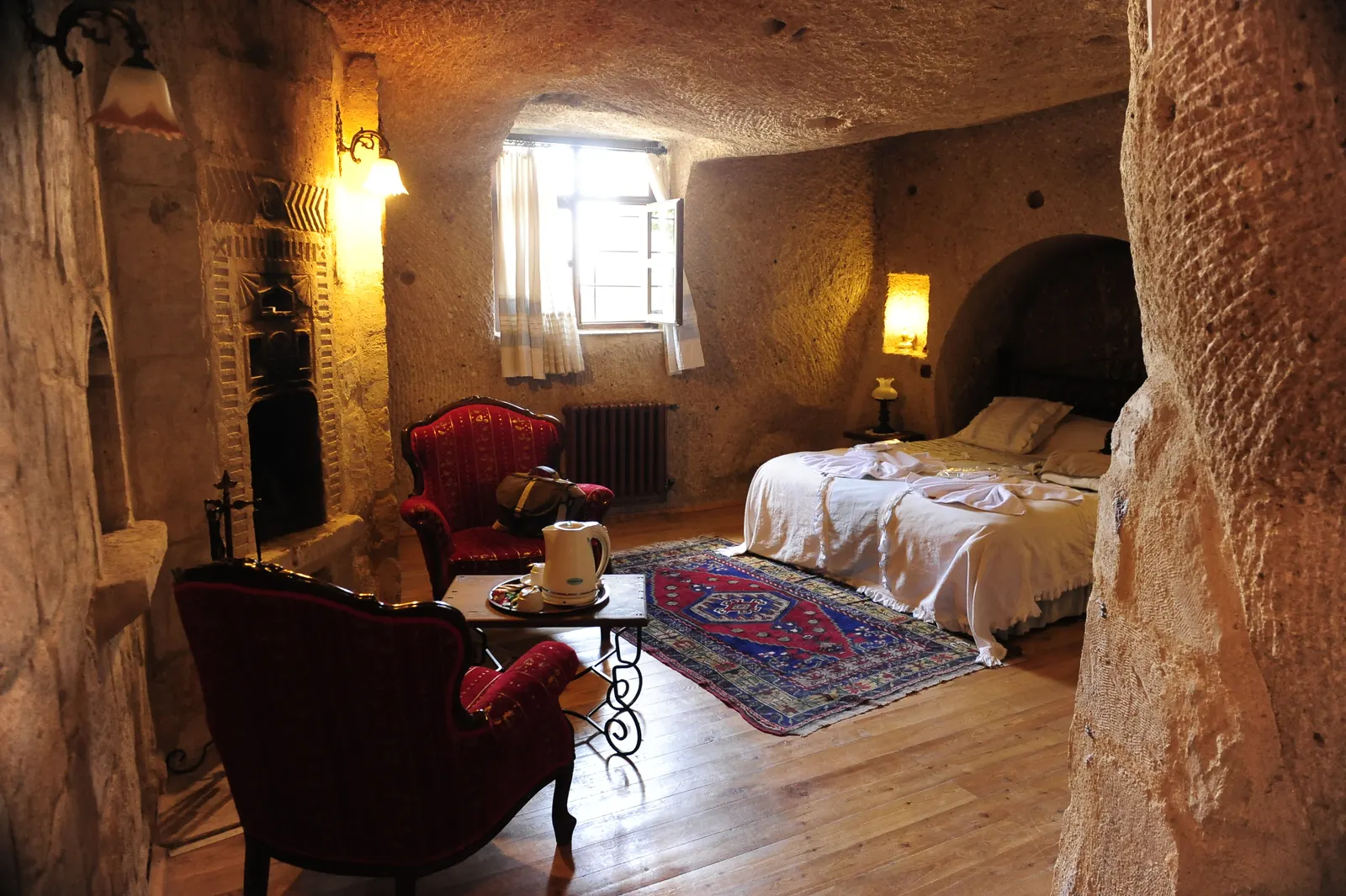
The first night in a cave room begins with silence. The walls are thick, sound from outside thins out, and the ceiling is rough and rounded as if shaped by hand. A small window in one corner, a dim lamp, a threshold where shoes come off. Most visitors to Cappadocia want to sleep in a room like this at least once, and they are right. But very different rooms are sold under the name "cave hotel". Knowing what to look for helps you find the room you actually want.
What does "cave hotel" mean?
- Carved room: cut directly into the rock. Walls and ceiling are tuff; the room is cool, quiet and often has few windows. This is where the real cave feeling is.
- Half-carved room: part rock and part stone wall added on. There is more light and the layout is more comfortable.
- Stone building, cave style: rooms built of cut stone with arches and vaults. They have the cave atmosphere but are not carved inside. That is not worse; they are usually easier to heat, ventilate and light.
Many hotels mix all three and call them all the same thing. Asking which type your room is comes first and matters most.
Eight things to ask before you choose
- Is the room really carved? Look at the ceiling texture and wall thickness in the photo; thickness shows best at the window edge.
- Window and light: some carved rooms have one small window and some none at all. If daylight matters to you, say so before booking.
- Damp and ventilation: tuff can hold moisture, and a stale smell in a closed room can be a problem for anyone with asthma or allergies. Ask about ventilation and dehumidifying.
- Heating and cooling: in summer a carved room is naturally cool; in winter the heating system matters. Radiators, underfloor heating or a fireplace?
- Stairs and luggage: hotels built into a slope usually mean hills and steps, and perhaps no lift. If you have heavy bags, a small child, a bad knee or a late return, ask how many steps there are and how well they are lit.
- Terrace and view: watching balloons from a terrace on balloon morning is a pleasant bonus. Is the terrace private or shared, and on which floor?
- Location: we offer free pick-up from hotels in Göreme, Uçhisar, Çavuşin, Ortahisar, Ürgüp and Avanos. In the centre an evening stroll is easy; at the edge of a village there is more quiet.
- Noise and mornings: thick walls block sound, but adjoining rooms, shared corridors and early balloon pick-ups can wake you. Ask about breakfast times too.
The cave room through the seasons
- Spring: rain raises the damp, so choose a room with good ventilation.
- Summer: a carved room shows its biggest advantage at midday; it is cool inside while outside bakes.
- Autumn: the most balanced season, with cool nights, mild days and pleasant evenings on the terrace.
- Winter: the quality of heating decides everything. A well-heated carved room is the most comfortable shelter of the season.
The first ten minutes in the room
- Try the door lock and check that the window opens and closes.
- Test hot water and water pressure.
- Look for damp patches or salt bloom on the walls; a faint smell is normal, a sharp mouldy one is not.
- Check the bed and pillows; stone rooms reflect sound, so even a creaking bed is heard.
- Think about the lighting of the path at night and the way out.
Who suits which room?
- Couples: a carved suite that opens onto a private terrace, for the silence and the view.
- Families with children: a stone building or half-carved room with few steps and two rooms on one level. Check terrace railings.
- Guests with limited mobility: ground-floor rooms and wide entrances. Write before booking, so that finding the right room together is easier.
- Photographers: a terrace or a roof, preferably facing east.
What drives the price difference?
Two rooms in the same hotel differ in price largely by room type, terrace, view and number of steps. Carved suites usually cost more because there are fewer of them, while a stone-built room can be better value. If your budget is limited, giving less weight to the terrace and view and more to the comfort of the room is often the wiser decision.
Accommodation on multi-day routes
If you would rather not choose the hotel yourself, on our multi-day routes a cave-hotel stay in a double room, breakfast included, is part of the package. Three Days: Roots and Valleys includes two nights and Four Days: Slow Cappadocia three. You can write your room preferences (number of steps, window, terrace) in the booking note. On these routes breakfast on balloon morning is eaten after landing, as on Sunrise Quiet, so do not expect the hotel's breakfast that day.
Three common mistakes
- Trusting only the photos. A room shot with a wide-angle lens looks twice its size. Ask for the floor area and the size of the bed.
- Not asking about steps. If there are dozens of steps up to a lovely terrace and your luggage is heavy, the first day starts badly.
- Rushing one night. Stay two or three nights: the first is for getting used to it, the second for enjoying it.
Three notes before booking
- Ask for a photo of your own room; general photos often show the best room.
- Ask about steps between the entrance and the room, and about lighting on the way.
- Tell the hotel in advance about early balloon departures and your pick-up time.
Give yourself some time on the first evening to get used to the feel of the room; by the second day it seems like a corner of your own home. The value of a cave room lies in a few hours of silence and the first light of the morning. Choose the right one and you walk the valley the next day better rested.