
Cappadocia in winter
Snow on the chimneys, short days, warm tables and empty valleys: how to plan the balloon, walks, the underground city and dinners in a Cappadocian winter, what to wear and what to watch for.
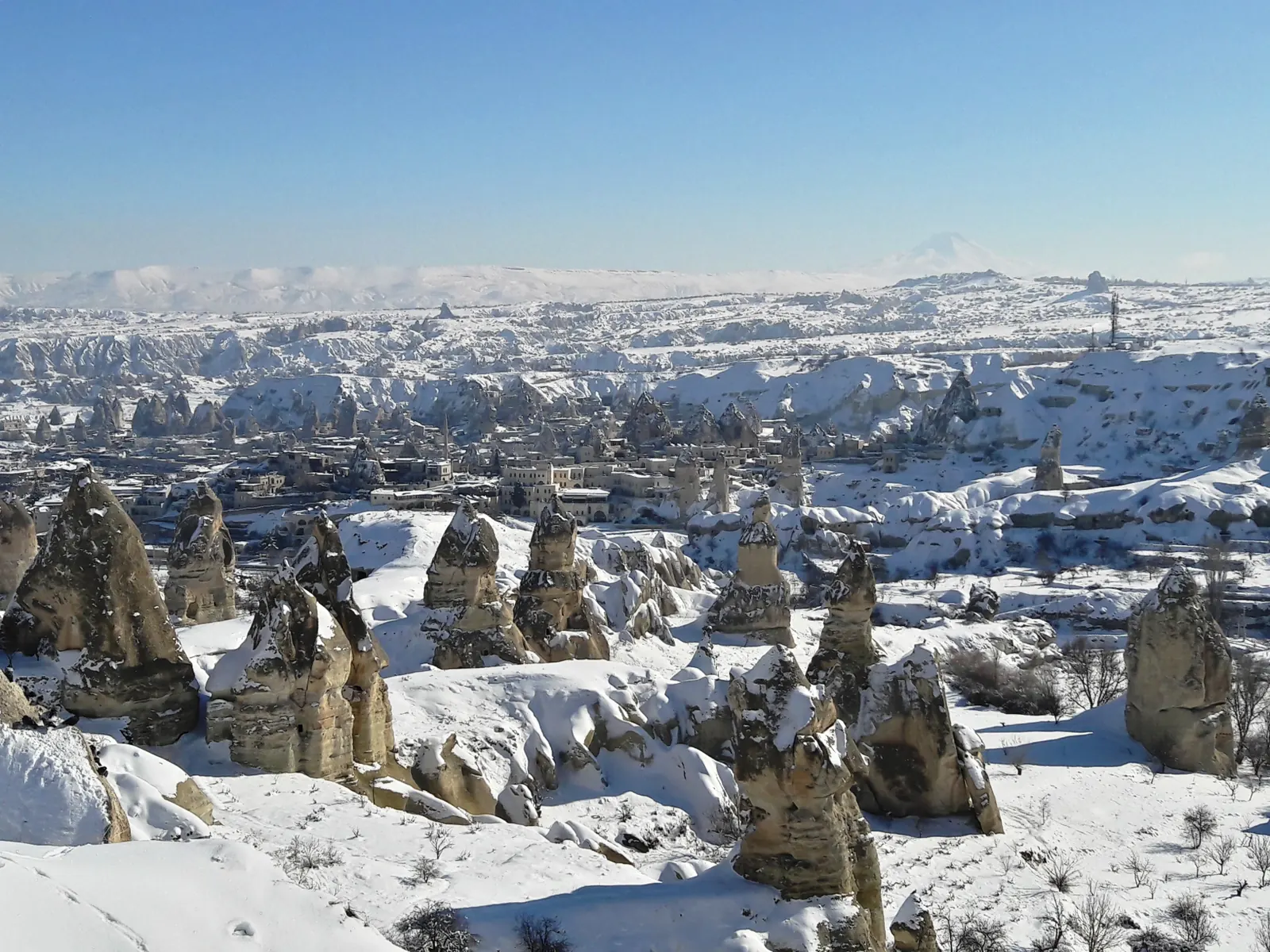
On the morning after snow, the valley becomes another place. The sound goes, a white cap sits on top of every chimney, and no one has yet walked the paths. A dog barks far away, a door opens, a chimney smokes. Winter is the quietest and least known face of Cappadocia. The cold does test you, but for anyone who prepares properly it can be one of the best seasons in the region. Here is what changes in winter and what stays the same.
What kind of season is it?
From the end of November to the beginning of March nights are mostly below freezing, and even sunny days stay cool. Snow falls in most winters but how long it lasts varies: in some years the valleys are white for a week, in others for a month. In the shortest days the sun rises around half past seven and sets at about five. There are fewer visitors, so you do not queue in the valleys or museums. Cave rooms with thick tuff walls hold heat well, and a room with good heating feels like real comfort after a day spent outdoors.
Month by month
- November: the last autumn light and the first cold. The harvest is over and pantries are full; still a comfortable month for walking.
- December and January: the coldest and quietest months. Snow is likely, and the days are at their shortest.
- February: the cold lasts, but days begin to lengthen and the light opens up.
- March: changeable, with snow one day and spring the next. Layers are the smartest choice.
Do balloons fly in winter?
They do, on every morning the weather allows. In cold, clear air the visibility is often excellent, and a snow-covered valley looks like a page from a different book. Snow, ice, fog and wind do affect the decision, though, and it is made in the early hours by the licensed operator. So put the balloon on one of your first mornings and keep a spare one free. If the weather stops Sunrise Quiet, you can move to the next morning at no charge or take a full refund. Dress in layers for the basket: it is warm under the burner but cold at the edge and in the wind.
Planning around short days
- Morning: set out after sunrise. Paths are frozen early and softer towards noon. Afternoon sessions of outdoor programmes such as the Pigeon Valley walk can be brought forward in winter.
- Midday: a hot table. Clay-pot kebab, lentil soup, bread from a wood oven; winter is when they belong.
- Afternoon: a covered or half-covered stop. The underground city suits this well, because the temperature underground is less affected by the season outside; the first stop of The Roots Tour is Derinkuyu.
- Evening: a long home-style dinner. The Rock-Cut Table unfolds in an enclosed hall with starters, meat cooked over a wood fire, saz and folk songs, and is one of the best winter evenings.
A sample winter day
- Morning: a late, long breakfast; enjoy the warmth of the room.
- Late morning: a one-hour walk once the sun is up: vineyard houses, the castle, a snow-covered path.
- Midday: a hot table, then a rest in the room.
- Mid-afternoon: the underground city or a museum.
- Evening: a home-style dinner with saz and folk songs.
What to wear
- Layer one: a thin base that wicks sweat away (wool or synthetic, not cotton).
- Layer two: a fleece or a wool sweater.
- Layer three: a thick windproof coat.
- Feet: boots with a non-slip sole, ankle support and waterproofing, plus a spare pair of socks.
- Hands and head: gloves, a hat, a scarf. For a balloon morning, thin gloves with fingertips that fold back make a camera easier to use.
A flask of hot tea and something dry to eat in your pocket change how a cold walk feels. Swap wet socks and gloves for dry ones at midday; wet fabric draws heat away fast.
Ground, roads and flights
Frost makes tuff paths and stone steps slippery. Mornings may bring icy patches, so take small steps, use handrails on staircases and hold children's hands. Snow and rain can delay roads and flights; on transfers the driver tracks your flight and waits if needed, but leave a good margin for your return flight. If you want to ski, the Erciyes ski centre lies in the direction of Kayseri and needs a day of its own.
The winter table
Winter is the season when this cooking speaks most easily. Dishes that simmer for hours in clay, the heat of a wood oven, hot soups, desserts made with dried fruit and a breakfast of molasses and tahini warm you from the inside. In many village houses the warmth of the stove or hearth is part of the meal. A group that arrived shivering and goes quiet the moment the oven door opens and the bread comes out is one of the small scenes of this season.
Cave hotels in winter
When you book, ask about heating: radiators, underfloor heating or a fireplace? Window position, bathroom warmth and water pressure matter even more in winter. On our multi-day routes, such as the three-day Roots and Valleys, a cave-hotel stay is included, and you can write your room preferences in the booking note.
The best things about winter
- Empty valleys, quiet museums and no queues in the narrow passages.
- Molasses, fruit leather and walnut sujuk are at their most plentiful in winter; pantries are full and tables stay long.
- Snow on the chimneys and long shadows from the low sun are rare material for photographs.
- With no queues at the gates, there is more time to talk with your guide and sit in front of a church just listening.
- Long evenings, warm rooms, strong tea.
Coming to Cappadocia in winter means agreeing not to hurry. The day ends early, the table goes on for a long time, and the walks stay short. Those who accept that see the region at its calmest.