
A photography guide for balloon mornings
Three kinds of light from blue hour to golden hour, what to carry in the basket, which settings work and how to shoot from the ground: a plain checklist for a balloon morning.
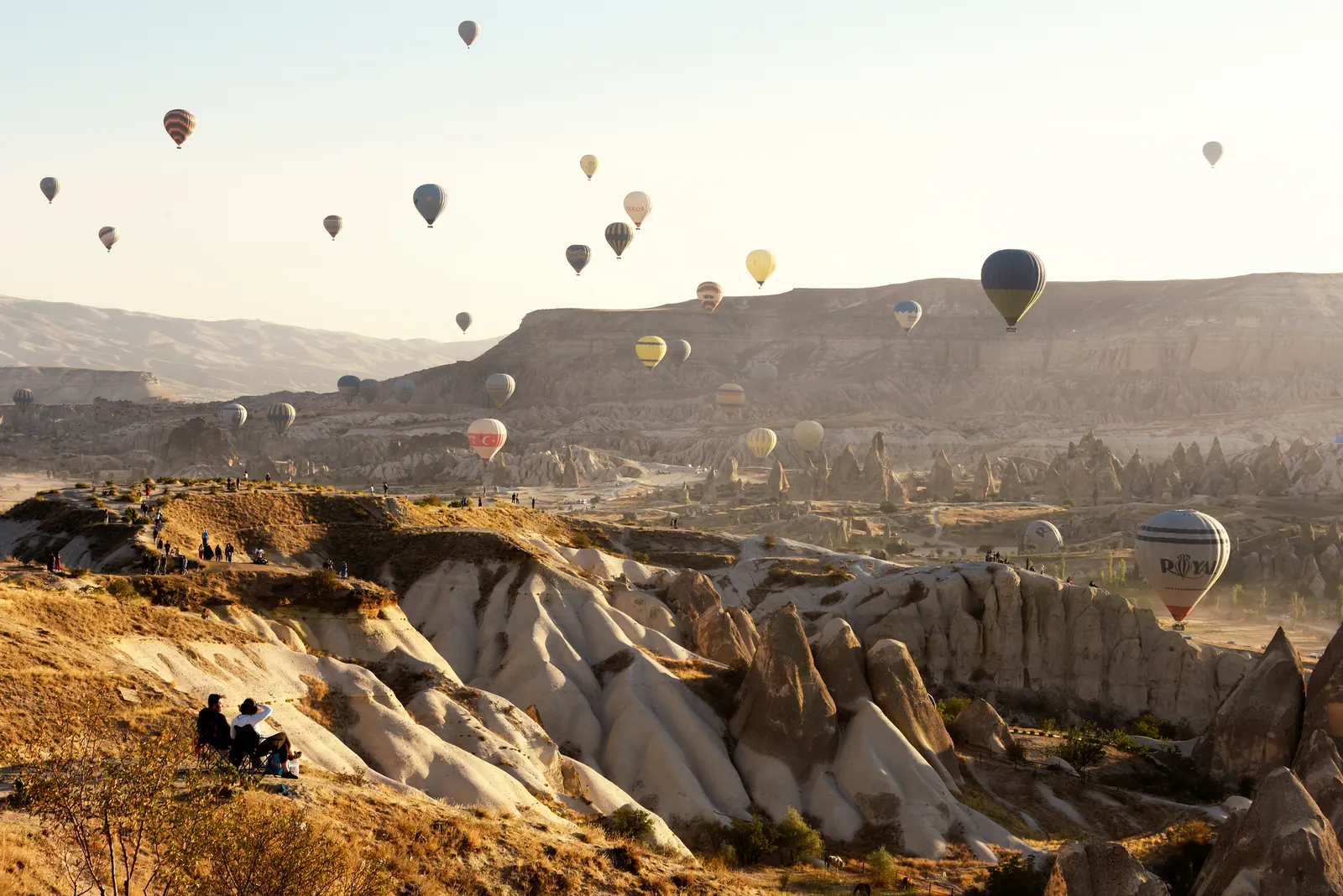
There are five people, five cameras and two phones along the edge of the basket, everyone looking at the same frame, and most of them find out they missed it once the flight is over. A balloon morning is generous and unforgiving at once: the light changes fast, the basket is small, hands are cold, and the best moment tends to arrive while you are adjusting a dial. This guide is meant to get your camera, and your head, ready beforehand.
Three kinds of light in one morning
Blue hour. Before take-off and while you rise, the sky is deep blue and the valley dark, with neighbouring burners glowing like orange dots. This is the job of low-light settings, and it often yields the best frame of the day.
Golden hour. Once the sun clears the horizon the tops of the fairy chimneys turn red, shadows stretch and the fabric of nearby balloons glows from within. The pilot can rise and sink to follow the light, so do not hurry; a few good frames are enough.
Full daylight. Close to landing the light hardens and colours fade. This is the moment for people and details: hands gripping the basket edge, the pilot's face, the shadow of another balloon.
What goes in the basket
- One body, two lenses: a wide zoom starting around 24 mm does most of the work, and a 70-200 mm compresses distant balloons and details. In small baskets, one bag per person and no more than two lenses are recommended.
- A strap: neck or wrist, without exception. Anything that falls out of a basket stays gone.
- A spare battery in an inside pocket: cold drains batteries fast, so keep the spare at body temperature.
- An empty memory card: deleting files mid-flight wastes time.
- A microfibre cloth: for condensation and fingerprints.
- Leave the tripod and selfie stick at the hotel: everyone's space is limited, and they can knock into the person beside you.
The evening before
- Charge the batteries and pack a spare.
- Empty the memory card and format it in the camera.
- Clean the lens and try your settings once; you will not want to hunt through menus in the dark.
- Write down the frames you hope for. This list helps when you talk to the pilot before take-off; the route depends on the wind, so nothing can be promised, but the pilot will do what is possible.
- Choose thin gloves with open fingertips instead of full gloves, so the buttons stay easy to use.
Settings
- Shoot RAW. A dark sky and a bright flame share one frame, and a RAW file lets you recover shadows and highlights later.
- In blue hour: ISO 1600-3200, shutter no slower than 1/125, aperture wide open. The basket moves gently, but people do not stay still.
- When the burner fires, metering goes wrong. Flame light upsets exposure, so use spot metering or exposure lock, and pull exposure compensation down if needed.
- Fix white balance to daylight. Auto settings neutralise the warm colours of morning.
- Focus: continuous autofocus, f/5.6-f/8 for landscapes. For close portraits, put the focus point on the eyes.
- Burst mode: shoot short bursts when flames fire or hands move, then pick later.
If you shoot with a phone
A phone does plenty on this morning as long as it has a strap. Clean the lens glass, use night mode only on still scenes (it can blur in a swaying basket) and stay away from panorama mode. Lock exposure on the sky by tapping the screen so that the picture does not flare when the burner fires. If you want to record some video, hold the phone horizontally and move slowly and steadily.
Season and weather
In summer the sun rises early, take-off is very early and the light hardens quickly. In winter the sun comes up late and the air is cold, but on clear mornings the horizon line is sharp. On a cloudy morning colours soften, and flame and fabric stand out more against a grey sky. If wind or fog gets in the way, the operator decides whether to fly. You may need a second chance for your pictures, so keep a spare morning free in your schedule.
Five common mistakes
- Changing lenses during the flight. There is dust and wind in the basket; if you do not have two bodies, choose your lenses beforehand.
- Leaving ISO at its blue-hour value after the light has changed.
- Starting with a full card or a half-charged battery.
- Checking the screen all the time instead of framing. Shoot first, review later.
- Shooting towards the horizon and blowing out the whole sky. Expose for the sky and lift the shadows later from the RAW file.
Ideas for framing
- Include other balloons: one balloon in an empty sky is calm, three side by side are lively.
- Put the basket edge or a hand in the foreground to give depth.
- Shoot the valley in portrait orientation; the height of the chimneys reads better upright.
- When the pilot descends, take close shots of the chimney tops.
Shooting from the ground
You do not have to fly to get the sky; it looks fine from the ground too. On the Golden Hour flight you can photograph the inflation from the ground, where the fabric lit from inside gives the first good frame of the day. After the flight, from the launch field or a hill, a long lens packs balloons tightly into the frame. Balloons against the horizon turn into silhouettes, so set your exposure for the sky. Drone use needs permission and is a serious risk in airspace shared with balloons, so please do not fly one.
If you would rather put photography second and give your attention to the flight itself, Sunrise Quiet flies in a mid-size basket with up to twelve guests. For evening light, the sunset picnic at Kızılçukur offers the same golden tones at the other end of the day.
A last suggestion: put the camera down for a while
Watching half of the flight from behind a camera changes how you remember it. Try spending the first ten minutes after take-off and the last ten before landing without it. The silence, the wind at the basket edge, the village shrinking as you climb: none of that fits in a file, yet it gives your photographs their meaning.