
Slow travel in Cappadocia
Two stops a day, long pauses, afternoons left empty: how to see Cappadocia by rhythm instead of by checklist, with the shape of a slow day, seasonal rhythm and three questions to test your plan.
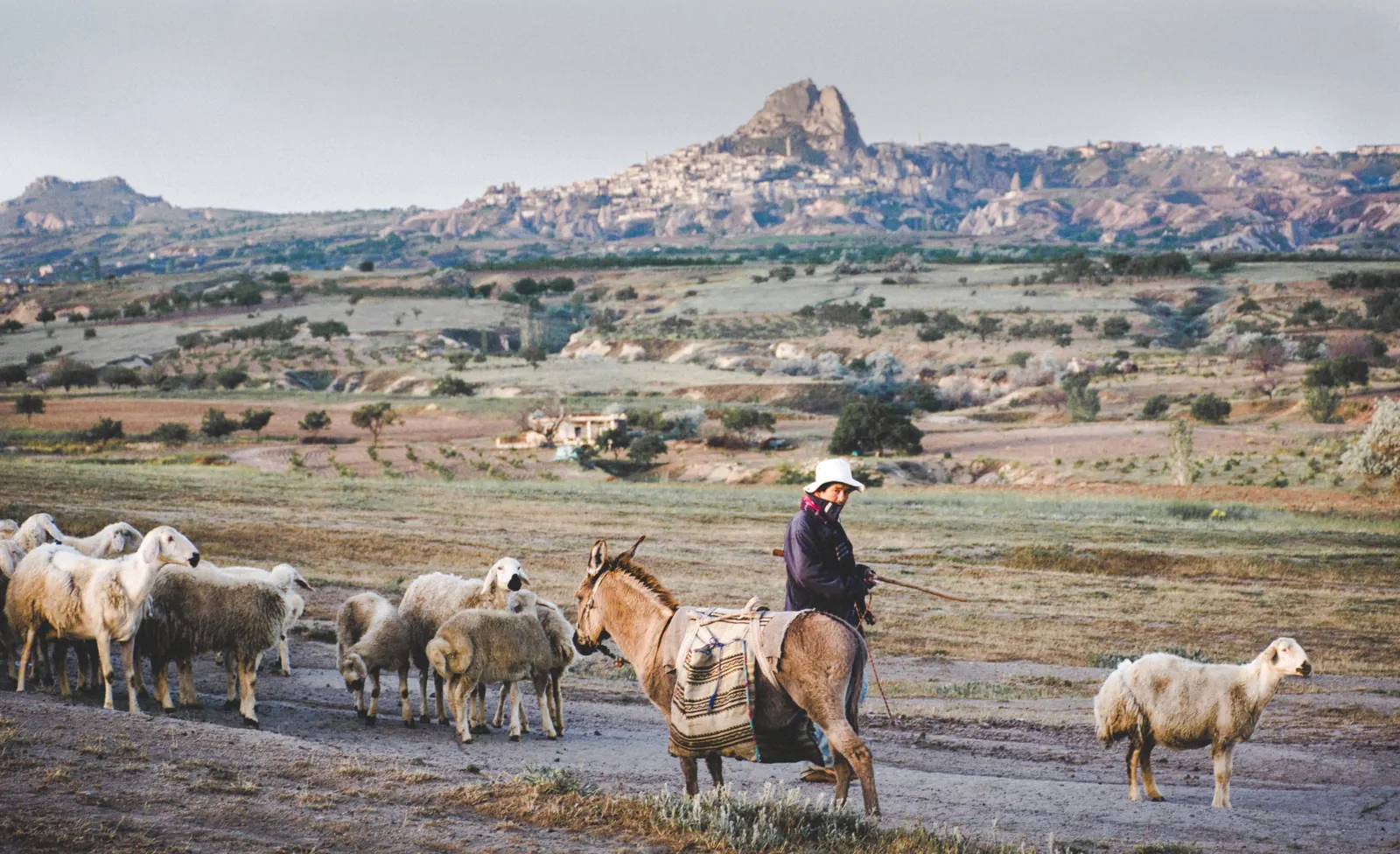
Most people arrive in Cappadocia with a list: the balloon, an underground city, the open-air museum, a hill for sunset, a pottery workshop. The map is small and the list is short, so in three days you can tick every box. By the third evening, though, what many remember is not a place but a tiredness. This guide is about shrinking the list so that whatever is left can take up proper room.
The distances are short, but looking takes time
Getting from Göreme to Uçhisar, Ürgüp or Avanos usually takes under half an hour by car, and that closeness tempts you into thinking you can fit it all in. Yet time here is spent standing in front of things, not driving between them. Tuff changes colour as the day goes on: pale cream at breakfast, nearly white at noon, honey by late afternoon, then pink and violet as the sun drops. Look at one valley at two different hours and you have seen two places. Hurry, and you only ever see the first.
The two-stop rule
Our advice is simple: no more than two stops in a day, one in the morning and one after lunch, with a long pause between them. By a stop we mean a valley, a museum, a workshop or a village house. The drive, lunch and the ride back to the hotel do not count. The rule looks stingy at first, but it changes one thing: you stop checking your watch. There is time to rest a hand on the texture of the rock, or to finish the glass of tea instead of leaving it half full.
What a slow day looks like
- Early morning: cool air, soft light, empty paths. Put the walk here, and do not rush breakfast.
- First stop: walk for an hour, sit for half an hour. Water and a piece of bread are all you need.
- Midday: shade, a table and something hot. In summer, keep the hottest hours for sitting, not walking.
- Afternoon: a nap, a shower, the terrace or nothing at all. This gap is the real secret of slow travel, so leave it blank on purpose.
- Evening: one moment of good light, whether that is a kilim on a hilltop or a table in a courtyard.
This outline is a starting point, not a rule. On a balloon morning you can drop the first stop entirely, and the day after a long walk you can turn the second stop into a meal. What matters is that at least one hour of the day passes without having to answer to anyone.
Letting the season set the pace
In spring the valleys turn green and the paths get muddy after rain, which suits short walks and afternoon light. Summer days are long but the midday heat is tiring: start early, spend noon in the shade and keep your energy for the evening. Autumn is the most generous season here, with the grape harvest in the vineyards, molasses bubbling in copper pots in village yards, and a low, golden light. Winter slows you down whether you like it or not. Days are short, snow hushes the valleys and a warm cave room becomes an activity of its own.
Slowing down the way you travel and eat
Speed hides in transport as well as in the schedule. Even an electric bike is a slow way to cross a valley: on Cycling the Valleys, about 22 km takes four hours, the group rides in single file behind the guide and stops for tea beside a vineyard. If you would rather watch the sun go down from a spread-out kilim than from a crowded viewing terrace, the picnic at Kızılçukur does exactly that: a half-hour walk, then you sit. For a few days in this rhythm, Four Days: Slow Cappadocia is built around no more than two stops a day and a second-day afternoon that is empty on purpose.
A sample for three nights
- Day one: arrive, settle into the cave room, take a short walk around Göreme towards evening. Nothing else.
- Day two: a walk in a valley in the morning, rest in the afternoon, a picnic at sunset.
- Day three: a long lunch in a village house, then free hours.
If you want to fit a balloon flight into this, put it on one of your first mornings; if the weather postpones it, you still have a spare morning.
The "what if I never come back" objection
This is the strongest argument against going slowly: I may not return, so I should see everything. Our answer is that trying to see everything often leads to the same place as seeing nothing. Choose three things instead: one morning you really want, one table you really want, one walk you really want. The rest is a gift. Most guests fill their days around those three with small finds of their own: warm bread bought while passing a bakery, a dovecote the guide stops to point out, a cat met in a courtyard.
What goes in the bag, and what stays out
- In: a water bottle, a hat, flat shoes, a light jacket for the evening and perhaps a small notebook.
- Out: the timetable. We send your pick-up time on WhatsApp the evening before, so you do not need to keep your own schedule during the day.
Three questions to test your plan
- Do I have something planned for tomorrow evening, or is it empty? An empty evening is worth more than three hours written into the schedule.
- Am I in a vehicle for more than two hours in a day? If so, cut a stop, or treat the drive as part of the day.
- Is anything scheduled for the afternoon after the balloon? For someone who got up before dawn, the best programme is going back to bed.
When people talk about their time in Cappadocia afterwards, they seldom count the places. They describe the tea they drank beside a stream, the sound of bread being torn in a courtyard, the colour of the cliffs in the evening. Slow travel is simply a way of leaving room for those moments.